





AI Summary
- Bangladesh is one of the fastest-growing pharmaceutical export economies in the world, exporting to over 160 countries, but the end of its Least Developed Country status is removing the duty-free access that made Bangladeshi generics highly competitive and forcing manufacturers to upgrade to FDA-compliant automatic production equipment.
- The transition from semi-automatic to fully automatic tablet press machines is not just a quality upgrade for Bangladeshi exporters. It is a competitive necessity for maintaining access to regulated markets in the USA, Europe, and the Gulf when duty-free advantages no longer compensate for documentation gaps.
- A fully automatic tablet compression machine with locked PLC controls, compaction force-based auto weight monitoring, auto rejection with logging, 21 CFR Part 11 compliance, and complete batch reporting is the production tool that positions Bangladeshi pharmaceutical manufacturers for the post-LDC export environment.
- Fluidpack's ACCURA high speed tablet press machines are used by pharmaceutical manufacturers across South and Southeast Asia and are designed to meet the documentation and compliance standards required for FDA-regulated export markets.
Introduction: Bangladesh Pharma's Critical Transition Moment
Bangladesh has built one of the most impressive pharmaceutical export success stories in the developing world. From a position of near-total import dependence in the 1980s, the country has grown a pharmaceutical industry that now exports to over 160 countries and serves as a major global supplier of affordable generic medicines. Companies like Square Pharmaceuticals, Beximco Pharmaceuticals, Incepta Pharmaceuticals, and Eskayef Bangladesh are recognised globally as quality manufacturers of generic drugs.
However, Bangladesh's pharmaceutical sector is now facing its most consequential structural challenge. The country's graduation from Least Developed Country status removes the WTO-mandated TRIPS waiver that has allowed Bangladeshi pharmaceutical manufacturers to produce patented medicines for export without licensing fees, and it removes duty-free market access to many of the export markets that have driven growth.
In this new environment, Bangladeshi pharmaceutical manufacturers can no longer rely on price advantage alone to compete in regulated markets. They need the quality documentation, regulatory compliance capability, and manufacturing precision that fully automatic tablet press machines provide. This article explains why the transition to automatic tablet compression equipment is essential for Bangladeshi pharmaceutical exporters and what to look for when making this investment.

Bangladesh's Pharmaceutical Export Achievement and the LDC Challenge
Bangladesh's pharmaceutical industry currently produces approximately 97 percent of the country's domestic medicine requirements and exports pharmaceuticals to 160 plus countries, including regulated markets in the European Union, the United States, Australia, and the Gulf Cooperation Council. This achievement was built on a combination of low production costs, skilled pharmaceutical workforce, improving manufacturing standards, and the regulatory advantages of LDC status.
LDC graduation changes this equation in two significant ways. First, the TRIPS waiver that allowed production of medicines without patent licensing becomes unavailable, affecting the product range that Bangladeshi manufacturers can produce for export. Second, duty-free access to key export markets is progressively withdrawn, removing the cost advantage that has compensated for documentation and compliance gaps in some markets.
In this environment, Bangladeshi manufacturers who have invested in fully compliant, fully automatic production equipment are significantly better positioned than those still relying on semi-automatic machines and manual documentation. The manufacturers who will thrive in the post-LDC export environment are those whose pharmaceutical tablet compression machines generate the electronic batch records, audit trails, and process validation data that FDA and EU-GMP inspections require.
What FDA Compliance Actually Requires from a Tablet Press Machine
Many Bangladeshi pharmaceutical manufacturers have some level of FDA awareness but may not fully understand what FDA compliance means specifically at the level of the tablet compression machine. The FDA's Current Good Manufacturing Practice regulations under 21 CFR Part 211 require that critical manufacturing equipment generates, maintains, and protects batch production records that accurately reflect the manufacturing process.
For a tablet press machine, this means the machine must operate with validated and documented process parameters, maintain a complete record of those parameters throughout every batch, generate a batch report that can be reviewed by FDA inspectors, and provide an audit trail showing any parameter changes during the batch with the identity of the person who authorised the change.
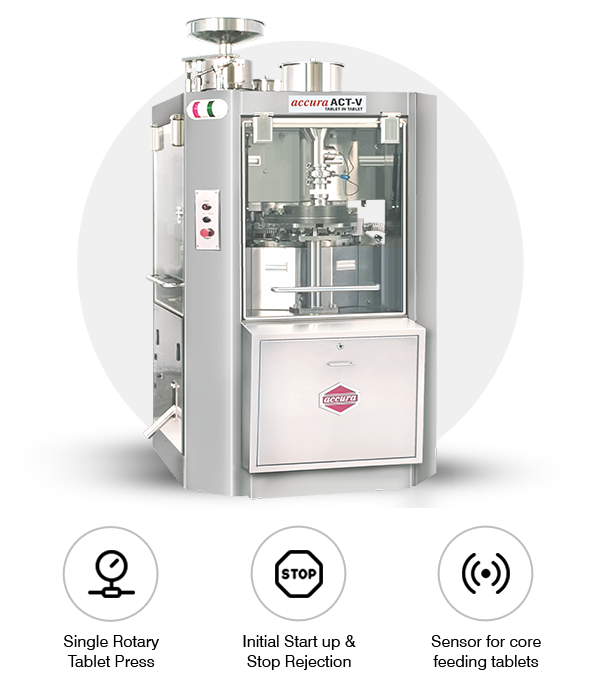
A semi-automatic tablet compression machine where operators adjust settings by hand and record production data in paper-based batch records cannot meet these requirements in the way that an FDA inspection expects to find them. A fully automatic tablet press with 21 CFR Part 11 compliant electronic record-keeping meets them by design.
Read Our Article
Advanced Tablet Press Machines and Their UsesThe 21 CFR Part 11 Standard and Why Bangladeshi Exporters Need It
21 CFR Part 11 is the FDA regulation governing electronic records and electronic signatures in pharmaceutical manufacturing. Its core requirements are that electronic records must be as trustworthy and tamper-proof as paper records, any change to an electronic record must be logged with the identity of the person who made the change, access to the system must be controlled by user authentication, and electronic signatures must be as legally valid as handwritten ones.
For a tablet compression machine, 21 CFR Part 11 compliance means the PLC control system maintains an audit trail of all parameter settings and changes, the control panel locks after the batch begins so parameters cannot be changed without authorisation, all production data is captured electronically and stored in a format that cannot be altered without leaving a trace, and the end-of-batch report is generated as an unalterable electronic record.
Bangladeshi manufacturers whose tablet press machines meet 21 CFR Part 11 standards have a fundamental competitive advantage in FDA export markets because their batch documentation is inspection-ready from the moment the batch is complete. Manufacturers without this capability face the risk of data integrity findings during FDA inspections, which are the most common reason for warning letters issued to South Asian pharmaceutical manufacturers.
Our Other Machine
F360 R High Speed Double Rotary Tablet Press MachineAuto Weight Control and Precision Tablet Manufacturing for Bangladeshi Export Products
Bangladesh's pharmaceutical export product range includes many standard generic medicines where price competition is intense, but it also includes an increasing number of specialty pharmaceutical products where quality and dosing precision are the primary market requirements. For both categories, the compaction force-based auto weight control system in a fully automatic tablet compression machine provides a significant manufacturing advantage.
Auto weight control works by continuously measuring the compression force applied to each tablet during the compression cycle. Since compression force correlates directly with tablet weight for a given formulation, the machine can identify tablets that are out of the target weight range in real time, before they exit the machine, and reject them automatically. This is categorically different from the periodic manual sampling approach used on semi-automatic machines, where out-of-specification tablets can pass undetected between sampling intervals.
For Bangladeshi manufacturers exporting to markets where tight weight uniformity specifications must be demonstrated with batch data, compaction force-based auto weight control is not a premium feature. It is a quality requirement. The batch report showing weight distribution, rejection rate, and rejection reasons is part of the documentation package that supports export market regulatory submissions.
Choosing the Right High Speed Tablet Press for Bangladesh's Export Scale
Bangladeshi pharmaceutical manufacturers exporting at commercial scale need tablet compression equipment capable of meeting the production volumes that make export economics viable. A high speed rotary tablet press machine producing 3 lakh to 7 lakh tablets per hour is the appropriate production tool for manufacturers at commercial export scale.
The double rotary tablet press design achieves this output by compressing tablets simultaneously from two sides of the turret on each revolution, effectively doubling the output of a single rotary machine at the same turret speed. For manufacturers who need to maximise production volume while maintaining tight quality control and compliance documentation, the fully automatic double rotary tablet compression machine represents the optimal production investment.
Tooling selection also matters for Bangladeshi export manufacturers. B tooling in 65 station configuration delivers the highest output for standard tablet sizes. D tooling in 51 station configuration is required for larger tablets or high dose formulations. Manufacturers producing a diverse generic product range benefit from machines with interchangeable turret design.
Read Our Article
Advanced Tablet Press Machines and Their UsesThe Upstream Production Line: Roll Compactor and Granulation Equipment
A tablet compression machine produces finished tablets, but the quality of those tablets depends significantly on the quality of the granules or powder blend fed into the machine. Bangladeshi pharmaceutical manufacturers who are upgrading their tablet compression equipment should simultaneously evaluate their upstream granulation capability.
Roll compactor machines perform dry granulation by compacting powder into ribbons that are then milled into granules. They are widely used for moisture-sensitive formulations and for manufacturers seeking to eliminate the drying step required in wet granulation. Oscillating granulator machines process wet or dry granules into consistent particle sizes suitable for tablet compression. Multi mills and vibro sifters handle particle size reduction and screening downstream of the granulator.
The quality, consistency, and flowability of granules entering the tablet press machine directly affects the tablet weight uniformity achieved by the compression machine. An investment in a high specification fully automatic tablet press should be matched by appropriate upstream granulation equipment.

Conclusion: The Fully Automatic Tablet Press Is Bangladesh's Post-LDC Competitive Tool
Bangladesh's pharmaceutical manufacturers have built an impressive export platform. The challenge of LDC graduation is real, but it is not insurmountable. The manufacturers who will maintain and grow their market position in regulated export markets are those who invest in the production infrastructure that turns regulatory compliance from a burden into a competitive advantage.
A fully automatic tablet press machine with 21 CFR Part 11-aligned electronic records, locked controls, auto weight monitoring, and complete batch reporting is the production tool that makes this possible. It is not just an equipment upgrade. It is a strategic investment in the long-term competitiveness of Bangladesh's pharmaceutical export sector.